Something that I hadn’t properly thought about til this week is that when I read a google page, it reads me back. With the help of some clever algorithms that I’m not sure I’ll ever really understand, websites are able to collect data about us and work out our every interest, and then tailor our search results based on them (scary, I know).
Companies use our data to sell to other companies to help them with advertising. Ever wondered how your Facebook ads always know exactly which Nike trainers to tempt you with, the ones you were looking at on footlocker.com only yesterday?
This basically means that in practice… my search results should be mildly different to yours depending on our background, political views and hobbies etc. Our search results are tailored to us and our own little world. What we put into google, it feeds us back.
It gets weirder the more you think about it! So for example, if I felt positively about the conservative party, then my top search results for ‘Boris Johnson’ would be positive news headlines, providing me with only good (and sometimes fake!) news. However, results about BoJo for a Labour party voter may come up different, showing him as the bad guy.
I wanted to test this out first hand and see whether mine and my friends’ results really were different.
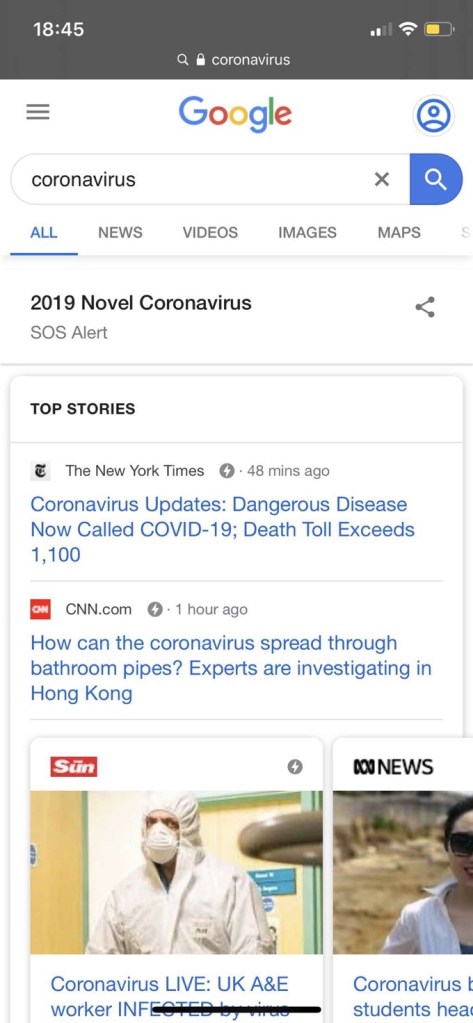
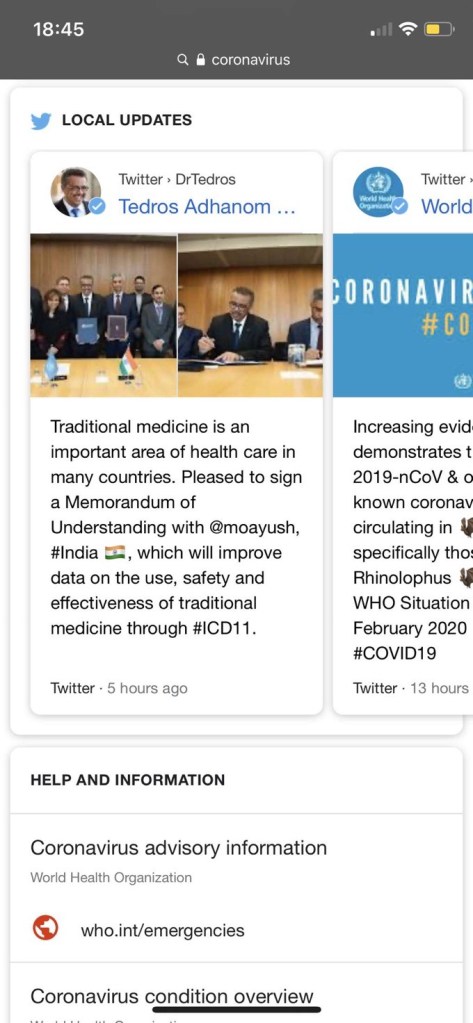
To start with I just searched the current news topic “corona-virus” and got my British friend, who has been living in Australia for over a year now, to do the same.
Here are her top results (searched in Perth, Australia):
And here are mine:
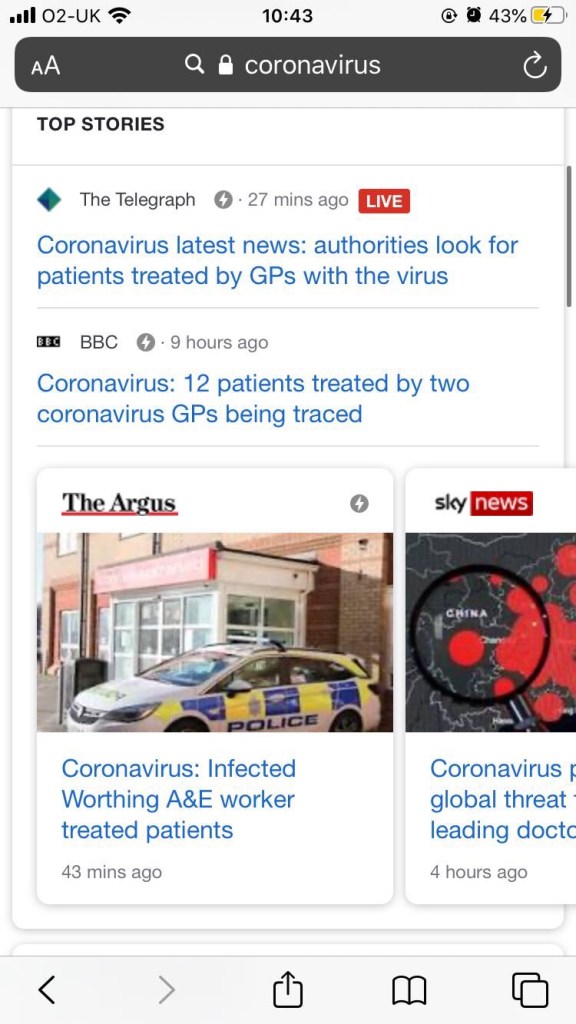
The main differences in our results seemed to be based on location. My friend’s results talked about corona-virus in Hong Kong and India, presumably because she is closer to those places than I, meaning they are more relevant to her and her bubble. My top results came from BBC news and The Telegraph, whilst hers were The New York Times and CNN.
Saying this, one of her results actually came from The Sun, perhaps as after all, she is British… and can we ever really escape The Sun’s shitty news articles?
Whilst interesting, these results seemed to give me pretty obvious results mainly based on our location, which I sort of could have guessed would happen. As corona-virus a disease, something that can not have extreme opinions on, I wanted to look into more opinionated and political areas. This is something that was mentioned in the lecture and got me thinking. So, I went on to ask some of the people I live with to search the internet for ‘Boris Johnson’ so I could see whether our results would differ.
Here are results from some of our searches:
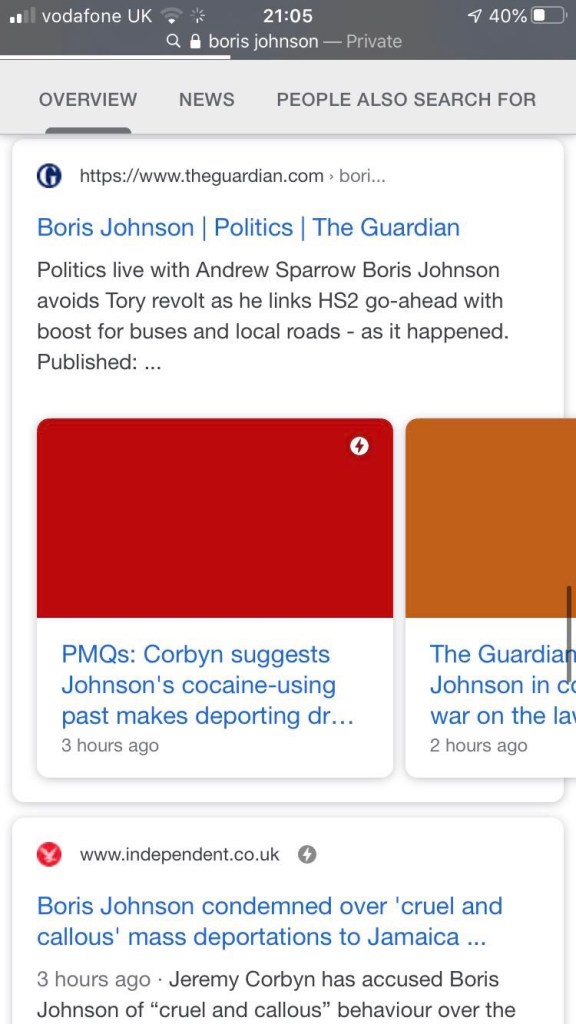
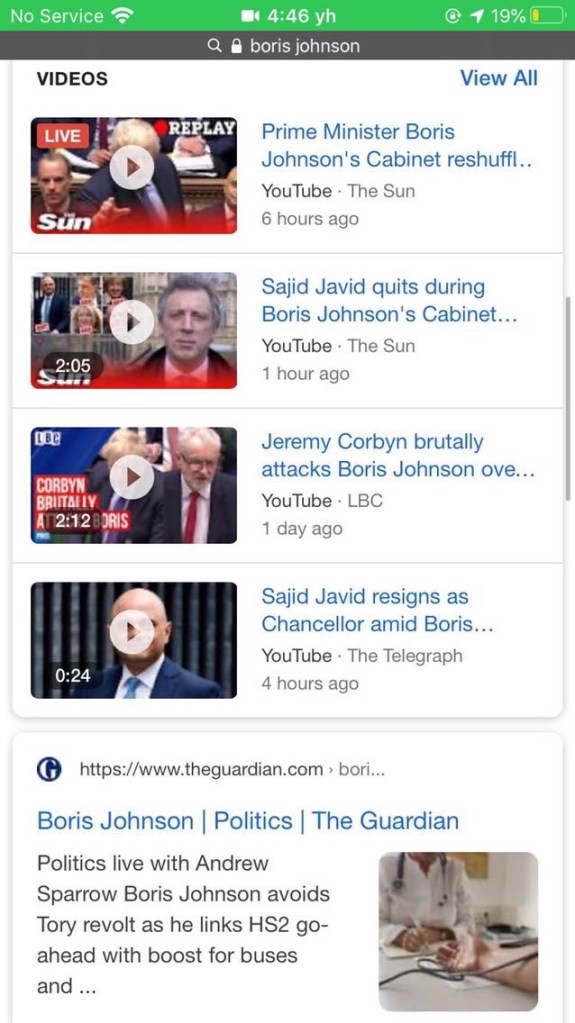
All of our top results came up slightly differently, whether this was in terms of the types of websites that came up or the order in which they were displayed and prioritised.
Top news articles mostly framed Boris in a negative light in terms of his recent actions, such as Corbyn attacking him over doing something wrong, and also his past, like taking cocaine. My friends and I have reasonably similar views, although it was interesting to see that our results did still all in fact come up differently in some way.
I didn’t actually consider though, that some of the people I asked to do this for me were using private browsing, probably something I should consider doing after learning all about this. This may have actually affected the results meaning they weren’t so tailored to individual bubbles, however it was an interesting to see anyway.
People like to take this one step further and use a VPN: a way of searching the internet without it knowing which country you’re in and who you are.
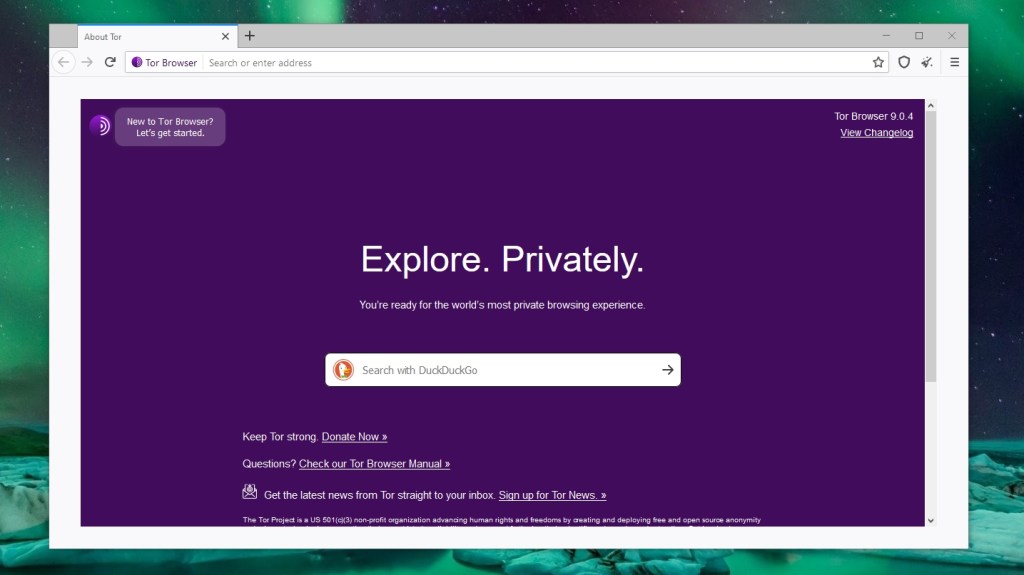
Using a VPN such as ‘tor browser’ makes the search results more neutral. It’s not surprising that so many people use VPN’s nowadays really, especially when the government seem to be tracking our every move even down to our google searches. I would be interested to see what my facebook ads would look like in the future if I started searching the internet only using a VPN.
Oh, and on top of all of this, it is also important to remember that not only are our searches related to us and our own bubble, but they are also filtered by authorities meaning that we are only seeing a small percentage of information. We don’t know the half of it!
Have I scared you yet? Carry on the discussion below on how you feel about the internet using and selling your data, and whether or not you might want to start using a VPN from now on..



2 replies on “Living in a Bubble ☁”
This is a really excellent empirical study of how personalisation really works. Of course, location is one of the key data points that Google uses. It will also use information about the kinds of newspapers you have clicked on before, so if you are a Guardian reader, it’s likely that you are going to get Guardian articles. You’re right that it depends on whether or not you are signed in to Google and whether or not you have set it on private browsing (though Google can still track you when you’re on that setting–it just doesn’t store your history on the devices cache). Lots of great ways to try to confuse google. Here’s one that Google squashed:
https://www.vice.com/en_us/article/nz7m7m/google-squashed-a-chrome-extension-that-flooded-ad-networks-with-disinformation
LikeLike
Your post about the existence of filter bubbles is incredibly informative, if not somewhat alarming! A sentiment that resonated with me is the reciprocation that occurs when reading a Google page as it reads us back, through converting our collateral data into results of tremendous predictive value. To a certain extent, it seems deceptive that the search engine uses prediction and premeditation to provide information that is supposedly suitable for us. This type of surveillance capitalism is also rather corrupt if our personal details are being traded between authorities for targeted advertisement purposes. Not only does ‘pretexting’ allow companies to manufacture desired commercial outcomes, I am concerned that it is impossible to avoid as these algorithms are simultaneously a secret and a commodity.
LikeLike