Categories
New media

Online Like Never Before

Due to our current situation regarding Coronavirus *Cardi B voice* (as if you haven’t heard about it enough, sorry!), the online community has gained a whole new feeling and meaning.

Since we are all basically grounded now for the foreseeable, it is not a surprise that we are all glued to our phones and computers more than ever before. My phone let me know how much my screen time has gone up in the last week and, well, I was disgusted. Just look how much I’ve used Snapchat alone…
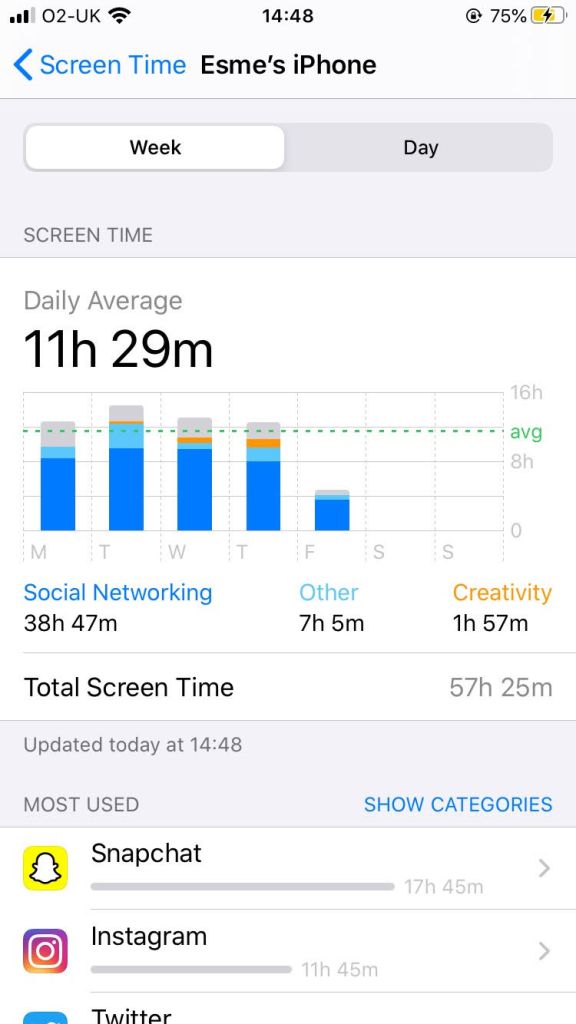
My craaazy overuse of social media is down to the fact we’ve suddenly been told to make our own entertainment without stepping outside. Basically every teenage boy’s dream😂. Across the nation, people are online and chatting from the moment they wake up to the moment they go to sleep. And I’m included. I mean, as an English student you would probably think I’d choose to read a book or something…rather than spend literally the whole day on my phone, but this is the 21st century darling! 😉

Apps such as Houseparty have made a huge comeback and are playing a big role in online communication right now. I did some browsing on what other people are saying about Houseparty and this is one of the many articles that came up about the app.
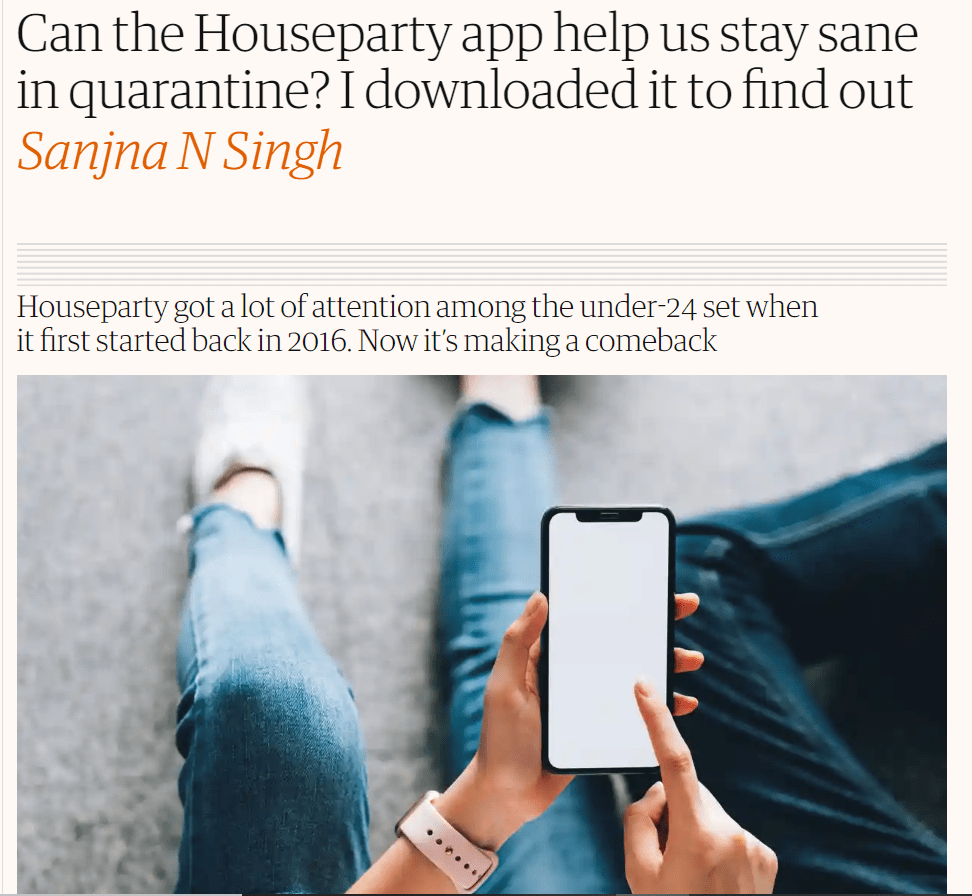
The article explains how Houseparty is helping to keep spirits high during this lonely time, and allows friends and family across the world to communicate in a similar way to Facetime, but in a bigger group. It also highlights that of course it is no way near as good as seeing friends in person, but it is a pretty good alternative for now and a great way to still have a bev or too with your mates on the weekend 🍺. Which as a nation, we all know is high in the priority list. There are loads of games you can play together too, such as ‘Heads Up’ or ‘Guess the Song Lyrics.’
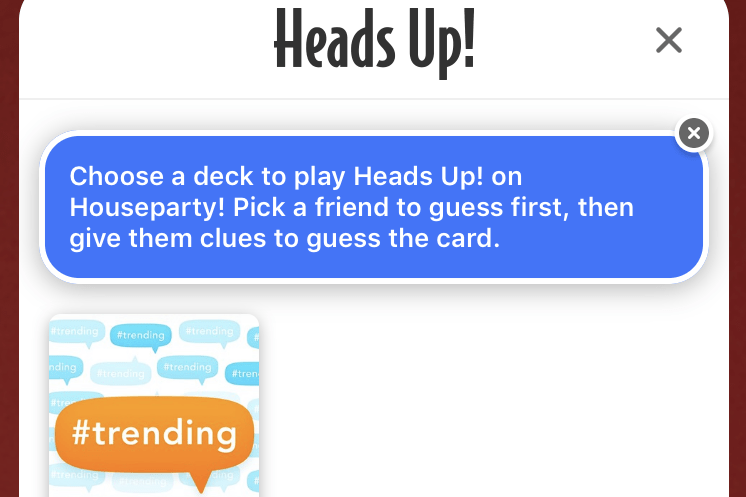
So now that we’re all bored shitless, housebound and only have uni assignments to pass the time, at least Houseparty is one thing we can actually do with our mates.

In these confusing and unsettling times, nothing like any of us have ever experienced before, I feel very grateful every day that I am able to contact pretty much anyone I know via the internet or phone. It puts me at ease knowing I can check that my loved ones are okay, or even just playing them at a crappy game of online pool.

Hours of random Youtube videos and Instagram scrolling have also filled up a few of my days although it is starting to wear thin, and I’m actually getting headaches from staring at my screen for so long. No good when there isn’t any paracetamol in the shops! 😐 It seems I’m not the only one spending all my time online though. In some ways it helps everything feel a bit more normal, whether it’s just having a chat with friends or watching something good on Netflix, just to try and forget the craziness that is our lives right now.

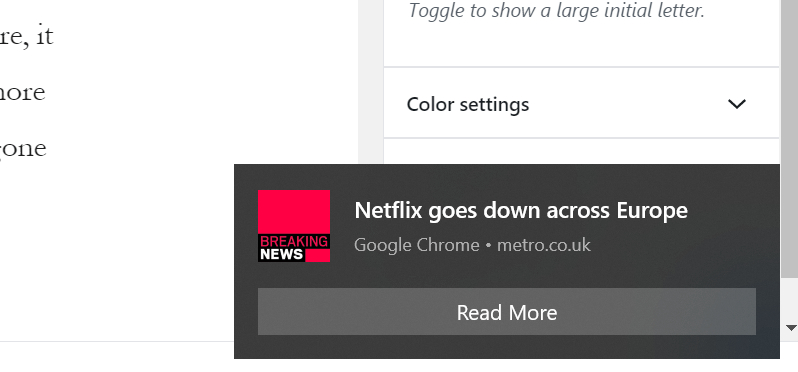
As I’m writing this I’ve just received a notification about some serious news…Netflix is down! We’ve broken the internet guys.
All jokes aside, I think it’s important in these times to value what we still have and the positives of the situation. I don’t know about you but I’ve had more time on my hands to connect with family members and have a nice long chat that I would usually be too busy for. I’ve also found myself chatting to people from school who I haven’t heard from in years. There is a real sense of community online and I think without it right now I would be struggling a lot more. Thank God for the internet!

Let me know in the discussion below if you feel that being online has been comforting for you during these times, and what you think it would be like if we didn’t have this luxury?


Categories
New media

Smart Phones and Stupid Kids

This week we learnt about another interesting topic: all about digital media and the processing of information.

Nowadays, our phones process a lot of info for us that in the past would have been processed by our brains. Pretty clever right, but is this just making us lazy and stupid? Some people think the constant use of mobile phones instead of actually using our brains could be impacting young peoples’ futures (including mine and yours!).

One of the main ideas we focused on was how long term memory may be becoming less important as time goes on. This is because we have all our important memories, passwords and phone numbers with us at all times, all jammed into a small handheld device in our pockets. And if you wanted to be even more 21st century… you don’t even need to keep this stuff stored on your phone, you can shove it on iCloud or Dropbox.

This is the sort of stuff that really confuses my Nana and Grandad, who of course have a phone number and address book kept safely in the dining room cupboard, and would probably keel over at the idea of a ‘shared online data centre’ that we can’t see or touch, or just the cloud to me and you.

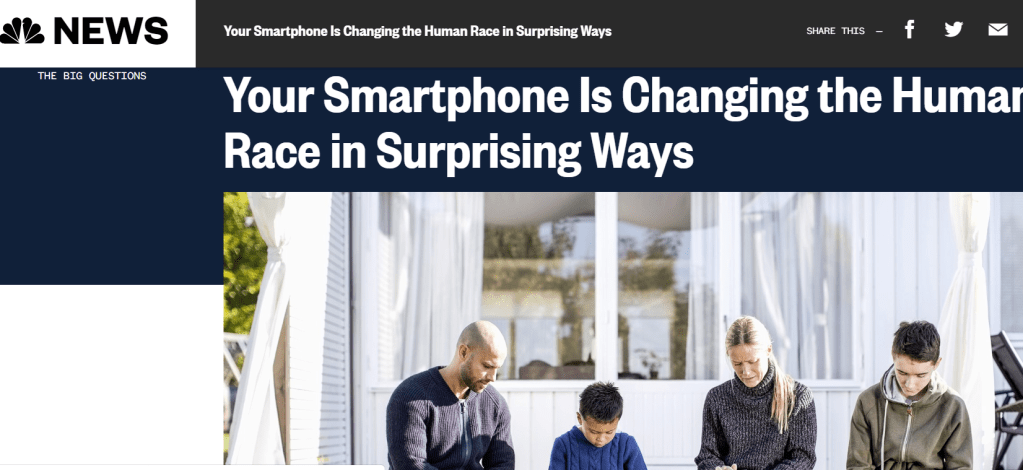
I searched around for some more info on how our phones process information for us, using my phone of course, and stumbled across an article by nbcnews.com:

One of the opinions, by Turkle, was that “we need to reclaim face-to-face conversation” as he claimed that having less of a relationship with technology allows us to focus on real life communication. This was following a study that showed children who went to an outdoor camp, and were banished from phones or laptops (is this 1950?🥴), were more able to read people’s emotions and expressions afterwards than kids who did not attend the camp…

This made me reflect on my own experiences and wonder how different I would be if I used my phone less and my brain more, would I be more observant? More caring? More clever? Maybe. Not that anyone would notice as they would be looking down at their phones anyway…

Why use my brain when my phone can do it for me anyway? Surely that allows more space in my brain to think about the important things in life, like Wednesday Union or last night’s Love Island 😋

The article also explored other more optimistic views, like Dr. Hampton who thinks processing and accessing information via our phones may actually be expanding our world views and helping us to maintain relationships. As a teenager, I, of course, side with Hampton over Turkle as I don’t personally think the youth of today are any less intelligent than our older generations, despite our different ways of processing information.

Although it’s still early days in being able to see any real effects of excessive mobile phone use and processing of info on young people, it sure will be interesting to see whether our generation lack any skills in later life because of this.

Is there anything you think we might miss out on in later life because we let our phones do things for us? Let me know in the discussion below

Categories
New media

My First Ever Blog Post

To start off my first blog post it seems a good idea to talk about something we explored in lecture only yesterday…

Multilingualism online

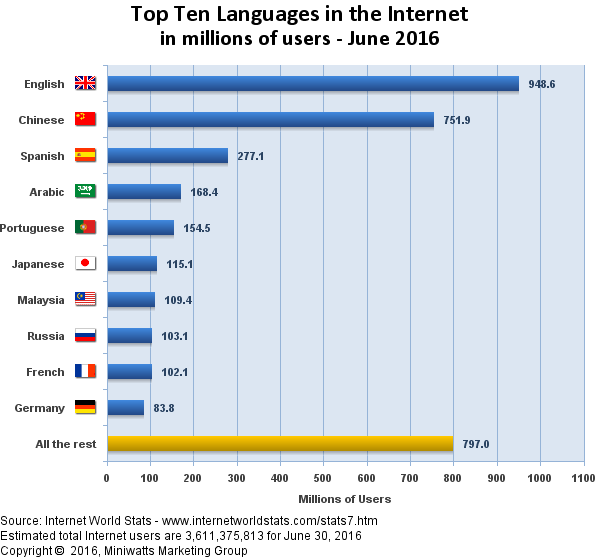
We were told that back in 1998, more than 80% of the internet’s content was written in English. I thought this was astonishing, although not as astonishing as the fact that by 2012 this figure had already dropped to 55%!

It seemed the rest of the world was catching up quickly, although the presence of English on the internet has remained high, and at this rate probs always will. Followed by Chinese, it is the most used language online by far.

At first, I thought perhaps this was due to Brits, Aussies and Americans spending all their time on Facebook, filling the internet with useless status updates. Although other justifications for the high percentage of English became clear to me.

One of them being that English is a Lingua Franca. In other words, it is a common language that speakers from all over the world can use to communicate. A lot of info online is in English which allows people from all over the world, who speak this Lingua Franca, to access it.

It didn’t even cross my mind that speakers of a minority language, in which the search results may provide minimal information, may actuallygoogle-search in English for a higher quality of answers.

Because of its high internet presence and overall world dominance, some people may think English is a killer language. Call me biased, but the number of languages spoken in the world was declining before the internet was introduced and English was plastered all over it.

In some ways, the internet encourages multilingualism and has potential to support languages that are becoming extinct, bringing speakers of these languages together and educating others. From my own experience, I have used the internet to help my own language learning of German and Italian.

It seems amazing to me that there is one space where people from hundreds of countries can access, communicate on and learn from. Almost the whole world at our fingertips. It’s almost impossible to imagine a life without the internet now.

Design a site like this with WordPress.com
Get started